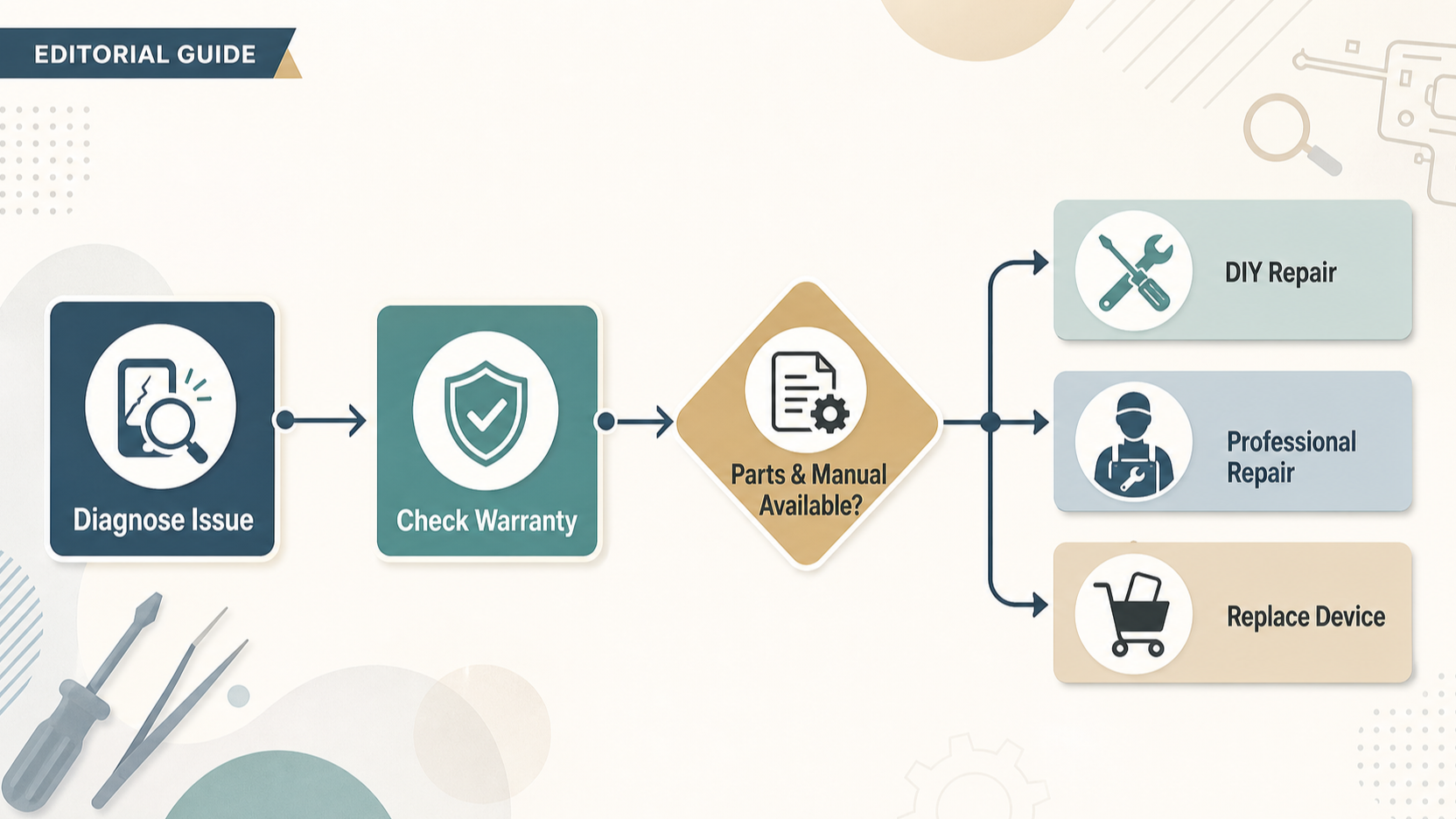
A repairable phone is not simply one with a spare part listed online. It is one you can diagnose, open, repair and reassemble with the right instructions, parts and tools—or confidently hand to a professional when that is the safer choice.
Verdict: Choose the Repair Route Before Choosing the Phone
AI-generated illustration — not a retailer product photo.
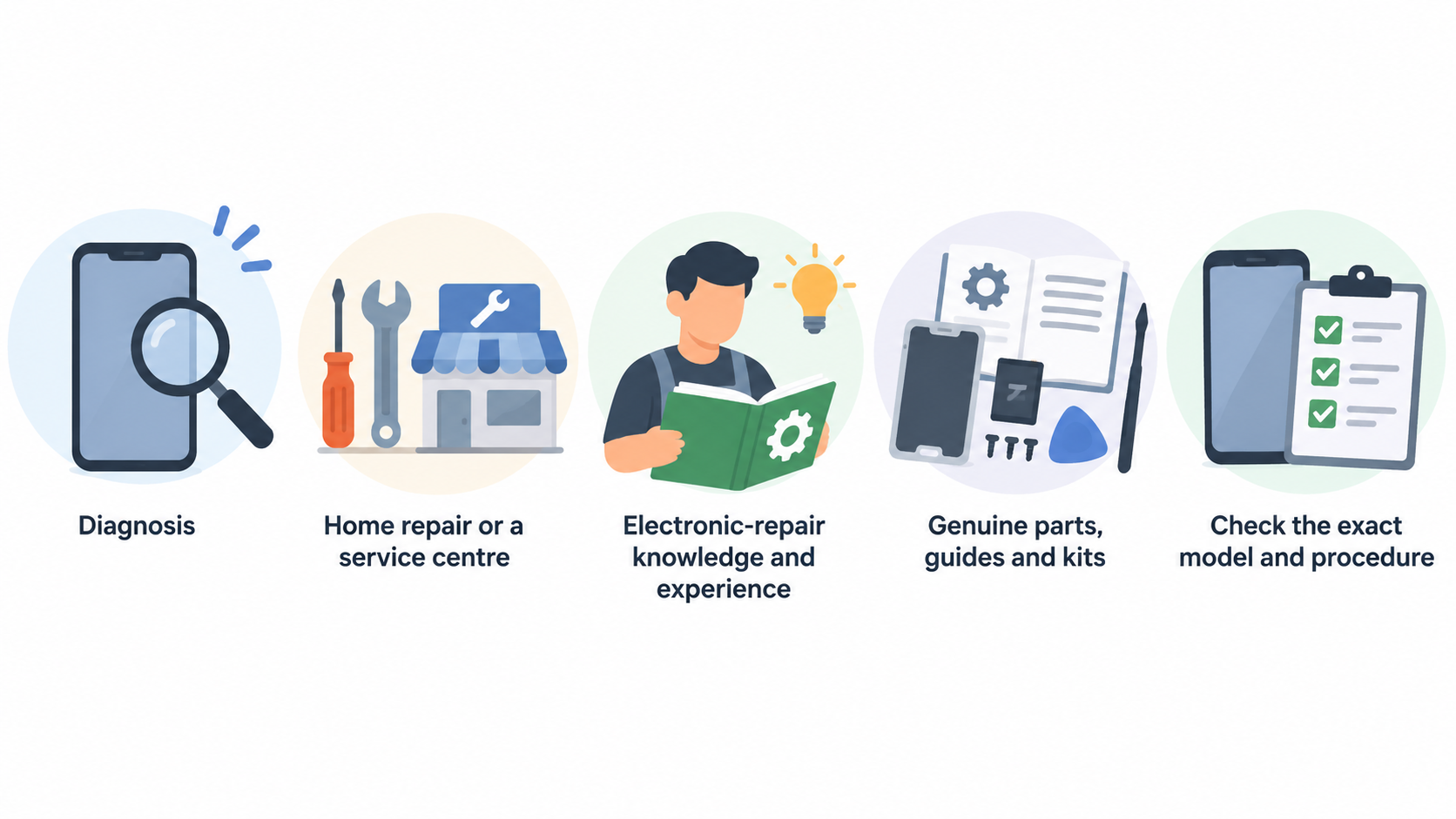
For UK owners who want the clearest DIY-first proposition, Fairphone is the strongest choice in the supplied evidence. Its repair hub starts with diagnosis, then directs owners towards a home repair or a service centre, with guides for several replaceable modules.
Apple and Samsung also offer official self-repair routes, but they are not blanket promises for every phone or every fault. Apple positions its programme for people with electronic-repair knowledge and experience; Samsung makes genuine parts, guides and kits available for some products. In both cases, check the exact model and procedure before buying anything.
Google Pixel should not be ranked alongside those programmes without first confirming current UK availability of the relevant official parts and manuals. Whatever the brand, begin with the fault, model, warranty position, safety risk and total cost—not a headline repairability score.
How We Compare Phone Repairability
AI-generated illustration — not a retailer product photo.
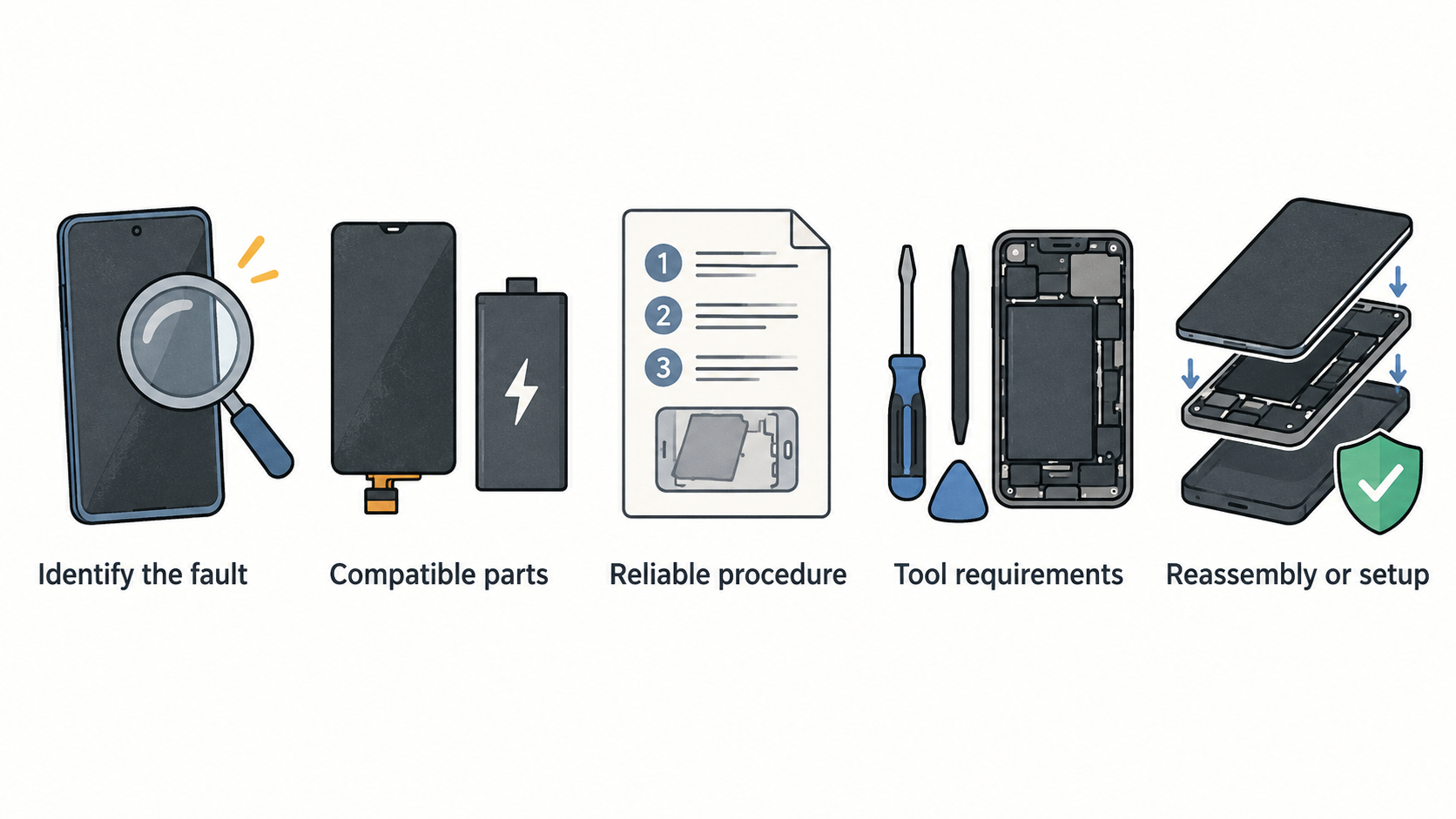
Practical repairability has several moving parts. A replacement screen or battery is only useful if the owner can identify the fault correctly, obtain compatible parts, follow a reliable procedure and complete any required reassembly or setup safely. Tool requirements, diagnostics and the difficulty of opening the device matter just as much as whether a part can be purchased.
This comparison therefore looks at published manufacturer support and independent repairability evidence, rather than treating a brand name as a universal rating. The scope is Apple iPhone, Samsung Galaxy, Google Pixel and Fairphone for UK owners. Support can differ by model, component and repair type, so an older handset from a well-supported brand may have a very different route from a newer one.
Independent teardown scoring adds a useful second perspective. iFixit describes repairability as straightforward disassembly and replacement of broken parts with manufacturer-supplied or endorsed parts and instructions, while also recognising that repairability involves more than those basics. That makes its scores useful for comparison, but not a substitute for the official manual for the phone in front of you.
Fairphone: The Most DIY-Oriented Support Model
AI-generated illustration — not a retailer product photo.
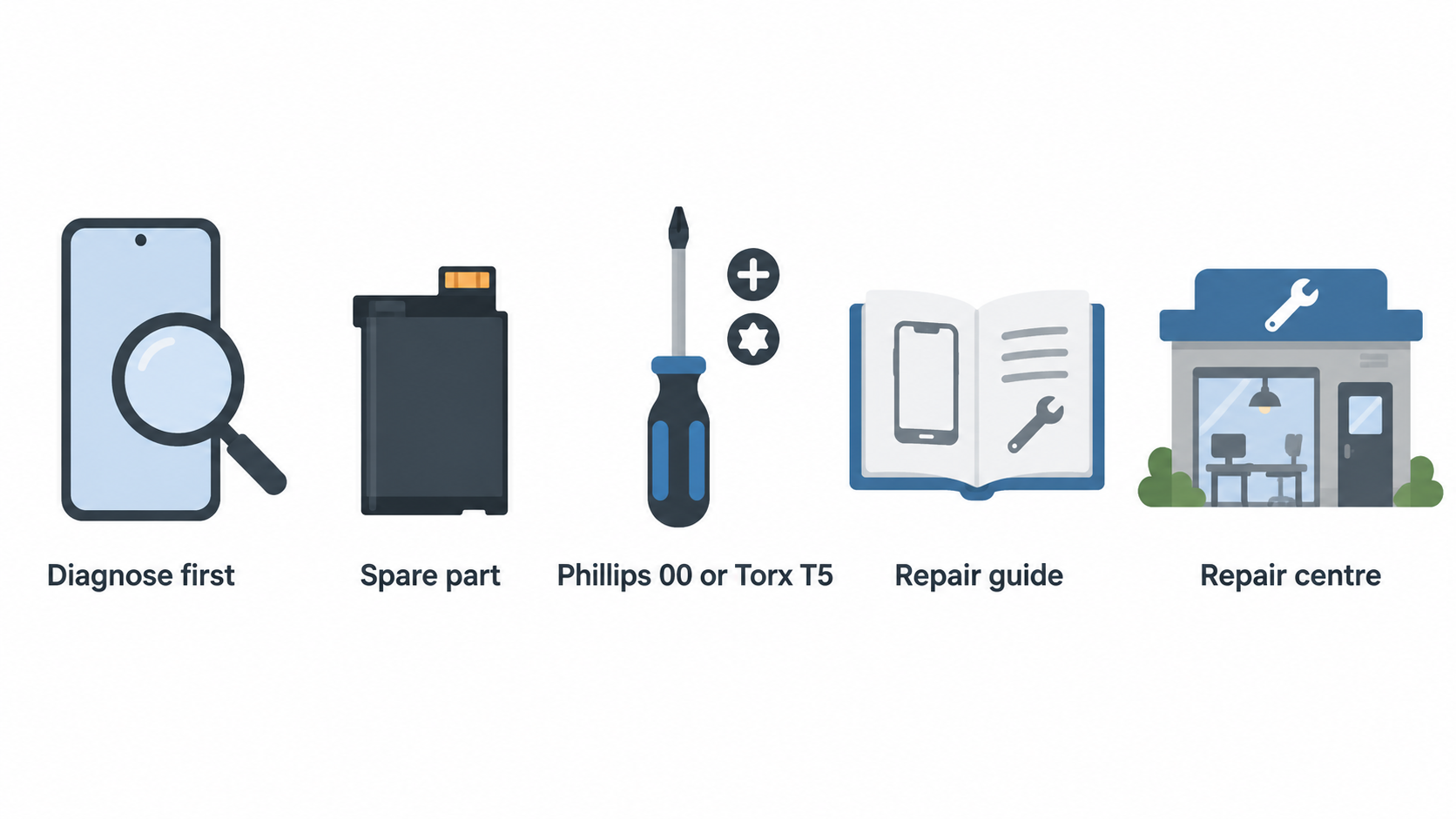
Fairphone has the most explicitly DIY-oriented support model in the supplied evidence. Its repairs page asks owners to diagnose the device first, then presents two routes: send it to a repair centre or repair it at home. That sequence is valuable because a symptom is not always a confirmed fault, and some issues are too complex for a sensible home repair.
For DIY work, Fairphone lists the spare part, a Phillips 00 or Torx T5 screwdriver and the relevant repair guide as the essentials. Its published guides cover models including Fairphone 3(+), Fairphone 4, Fairphone 5 and Fairphone (Gen. 6). The examples shown for the current generation include battery, display, cameras and earpiece, top unit, and loudspeaker with USB-C port replacements.
That makes Fairphone a particularly strong fit for an owner who expects to keep a phone for longer and is willing to follow a documented procedure. It does not mean every repair should be attempted at home. Fairphone itself says that complex problems may be better sent to its trusted repair centres, where the device can be diagnosed further and the owner can approve costs before work proceeds. Confirm the guide and part availability for your exact model before deciding.
Apple, Samsung and Google Pixel: Check Model-Specific Support
Apple’s UK Self Service Repair programme provides genuine Apple parts, repair manuals and professional-grade tools for eligible out-of-warranty repairs. Apple says the programme is intended for people with the knowledge and experience to repair electronic devices. Start with the manual for the specific device and repair type: it identifies the required parts, tools and materials.
This is a structured route for capable owners, not a reason to treat every iPhone repair as quick DIY. Read the procedure before ordering, particularly where it requires specialist tooling or an unfamiliar sequence. If the work is beyond your experience, an authorised or reputable professional may be the more proportionate option.
Samsung’s UK Self-Repair programme offers genuine parts for some Galaxy products. For some products, owners can download repair instructions and order repair kits; Samsung also provides model search and video guidance for work such as screen, charging-port and back-glass repair. Coverage is limited to some products, so check the exact model before making a repair plan.
Warranty is another reason to pause. Samsung says damage caused by an attempted repair by someone other than a Samsung Authorised Service Centre is not covered by warranty. Check your device’s current terms and conditions before opening it.
Why Repairability Scores and DIY Support Have Limits
A repairability score can help compare phone designs, but it cannot settle an individual repair decision. iFixit’s engineers tear down smartphones and score them from zero to ten, and its explanation makes clear that a repairable device should be straightforward to disassemble and allow replacement with suitable parts and instructions. That is useful evidence about design, not a guarantee that your repair will be easy, economical or safe.
Scores also need context. iFixit updates its scoring rubric as technologies, materials and design trends change. It says devices scored in earlier years may not receive exactly the same result if rescored today, although they can be compared with contemporaries. Compare like with like and read the scorecard version before drawing conclusions from a ranking.
DIY programmes have the same limit: availability of a guide does not remove the need for sound diagnosis and careful work. Stop and seek professional help if the fault is uncertain, a battery appears damaged, the device has a safety concern, or the procedure calls for skills or tools you do not have. A safe repair route is more valuable than completing a repair yourself.
Alternatives: Professional Repair or Replacement
Professional repair is a valid first choice when diagnosis is unclear, the phone is still under warranty, the repair is complex or the required tooling makes DIY poor value. Fairphone’s own process includes a service-centre route for issues that may be too complex for home repair, with further diagnosis and owner approval before chargeable work proceeds.
Replacement can also be sensible, but compare it with a real repair quote rather than an assumed one. Start with the exact model and fault, then consider the expected remaining life of the phone, the quality and suitability of replacement parts, the repair cost and the cost of a replacement device. A cracked screen on an otherwise healthy phone may have a different answer from a phone with uncertain charging, water or battery problems.
Ask a repairer what diagnosis is included, what part quality is proposed, whether the work has a warranty, and whether any data, sealing or functional checks are affected. That gives you a more useful comparison than choosing solely by the lowest advertised price.
Shortlist and Pre-Repair Checklist
Choose Fairphone if repairability is a priority at purchase and you value a manufacturer-published diagnostic flow, repair guides and clearly listed replaceable modules. It is the clearest repair-first option in the supplied evidence, subject to your exact model and the parts currently available.
Choose an eligible Apple or Samsung model if you are prepared to use the official, model-specific procedure and have the skills the work requires. Apple supplies manuals, genuine parts and professional-grade tools for eligible out-of-warranty repairs; Samsung offers genuine parts and, for some products, instructions and repair kits. Do not assume either route applies to every device.
Treat Pixel as a check-before-you-buy or check-before-you-repair option: verify current UK official manuals and parts availability for the model and fault first.
Before committing to any route:
- Identify the exact phone model and confirm the fault.
- Check the warranty and the consequences of an attempted repair.
- Read the official procedure in full.
- Confirm the necessary parts, tools and your ability to use them safely.
- Compare a professional quote with the replacement cost and likely remaining life of the phone.
Frequently Asked Questions
Can I repair my phone myself without voiding the warranty?
It depends on the phone, the repair and the applicable warranty terms. Apple describes its Self Service Repair route as an out-of-warranty repair programme for experienced people. Samsung says damage caused by an attempted repair outside a Samsung Authorised Service Centre is not covered by warranty. Check the terms for your exact model before opening it.
Are genuine parts always the best choice for a phone repair?
Genuine parts are the clearest match for the manufacturer’s documented procedure where they are available. Apple and Samsung both offer genuine parts through their official programmes. However, the right decision also depends on the fault, total cost, repairer warranty and whether the chosen repair route can complete the work properly.
Is a phone with a cracked screen worth repairing?
Often, but not automatically. Confirm the exact model, the full extent of the damage and the repair quote. If the phone is otherwise reliable and has useful remaining life, a screen repair may be more proportionate than replacement. If there are additional faults or safety concerns, obtain a diagnosis before deciding.
Why does my phone's repairability score not settle the DIY decision?
A score describes comparative repairability under a particular teardown rubric. It does not confirm that parts, manuals, tools, warranty conditions and safe procedures are available for your exact repair. Use the score as context, then verify the official procedure and your practical repair route.
Sources
Related reading
- Apple vs Samsung self-repair: parts, manuals, tools, diagnostics and practical limits for UK phone owners
- Apple iPhone repair support review: genuine parts, tools, manuals, calibration and limitations
- iFixit mobile repair review: device guides, replacement parts, tool range and practical limits
- Fairphone repairability review: modular parts, repair guides, tool needs and practical limitations
Editorial information: About our editorial team · Read our editorial policy · Read our affiliate disclosure.